
Structure, peers, and a space designed for how your child learns.
Center-based ABA therapy happens inside a Clementine clinic - a sensory-considered space built around the way children on the autism spectrum learn best. Predictable structure, dedicated therapy rooms, and other children practicing similar skills nearby.
- Sensory-aware therapy rooms
- Daily peer interaction in cohorts
- School-readiness baked into the day
A room can be a teacher too.
For some children, the home environment has too many cues for “this is play time” and not enough for “this is learning time.” A center-based program adds the missing structure - a different room, different cues, a slightly different cast of adults - and that small environmental shift can unlock skills that have stalled at home.
-
Predictable environment
Same room, same materials, same daily rhythm.
The consistency reduces cognitive load for your child and lets them focus on the skill work itself. Many families notice their child arrives ready to learn faster at the center than at home - fewer transitions to navigate before the day starts.
-
Peer-rich learning
Other children, similar ages.
Turn-taking, sharing materials, recovering from a peer's 'no,' joining group play - these need actual peers to practice. Center-based therapy puts your child alongside other learners working on similar skills, with their team scaffolding the social moments in real time.
-
Cohort-paced
Grouping that matches your child.
Children are matched into age- and skill-appropriate cohorts - not random mixes. Your child practices alongside peers who are on a similar developmental track, which makes the social learning more productive and the group sessions more comfortable.
-
School readiness
Builds the skills schools actually use.
Sitting at a table, transitioning when a timer goes off, raising a hand, lining up, eating in a group - center programs run these moments as part of the curriculum. When your child does walk into a classroom, the rhythm already feels familiar.

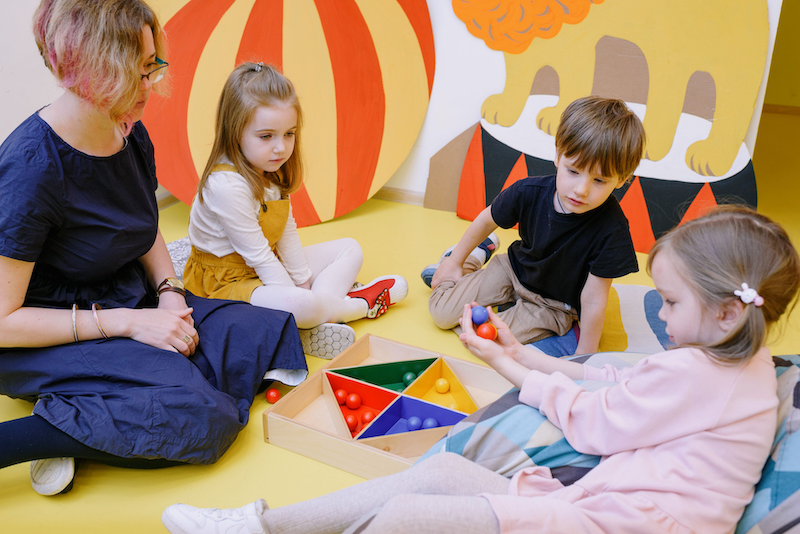


What a center-based day actually looks like.
A typical day at a Clementine center runs in predictable blocks. Children arrive, settle in, work through individualized and group activities, eat together, rest, and end the day with one clear transition home. The structure is the medicine.
-
Drop-off at a consistent door
-
One-on-one skill block
-
Small-group activities with peers
-
Eating in a group, regulating after
-
Transition back to home
These are illustrative schedules. Your child's actual session times are set with your care team.
A short walk-through of the logistics.
The center program is structured around predictable family logistics. Below is the rhythm parents tell us they appreciate most.
-
Drop-off
Same door, same time
A consistent entrance at the same time each day. Drop-off typically takes less than five minutes once a routine is established. A team member greets your child every morning.
-
The day
Half-day or full-day options
Your child spends the day in a structured rhythm of individual work, group activities, meals, and rest. The schedule is the same every day so your child knows exactly what is coming next.
-
Pickup
Brief handoff at the door
You arrive at pickup, meet the same team member, and get a 1-2 minute handoff - what your child worked on, how the day went, one specific thing to watch for at home this week.
-
Family time
Caregiver coaching built in
Once a week (or more, depending on your program), you sit in for a coaching session - observing live therapy and learning specific strategies you can use at home. Center-based doesn't mean parent-free.
Six things every Clementine center is built around.
Center-based ABA happens inside a space designed for how children on the autism spectrum learn best. Here is what every Clementine center includes - and where to visit.
-
Dedicated 1:1 therapy rooms
Quiet, individually-controlled rooms designed for focused skill work, stocked with developmentally-appropriate materials and built to minimize sensory load.
-
Sensory regulation space
A separate calm-down room with noise machines, lighting controls, soft seating, and tactile materials - for the moments your child needs to reset.
-
Group play & social skills areas
Open spaces for peer interaction, group instruction, and play-based social skills work - where turn-taking, shared attention, and friendship-building are practiced daily.
-
Parent observation area
A comfortable area where caregivers can watch live therapy without interrupting their child's session - and join in for coaching moments.
-
Family waiting lounge
Wi-Fi, comfortable seating, and quiet enough that you can take a work call or read a book during your child's session. We respect your time.
-
Snack and meal-prep station
A small kitchenette for snack breaks and lunch programs. Food tolerance and eating skills are part of many treatment plans, so meals are part of the day.
Where to visit
We're growing! Our first center is opening soon, with more locations to follow. While we prepare for our centers, we proudly provide in-home ABA services to families throughout the area. Reach out to learn more.
-
Virginia Beach
Virginia Beach , VAOpening soon - join the early list
Hours announced before opening
Join the early-list for Virginia Beach updates
Get on the early list -
Richmond
Richmond, VAOpening 2026 - join the early list
Hours announced before opening
Join the early-list for Richmond updates
Get on the early list -
Midwest expansion
Kansas · NebraskaLocations being scouted now
Anticipated 2027
Share what you need from us
Tell us your zip code
We accept many insurance plans.
Insurance is our job, not yours - our team can help get you started.





Considering center-based therapy? Here's the rest of the path.
Choosing our center is just the first decision. The next steps are short and predictable - most families move from an introductory call to a steady schedule at the clinic in about a month, and we carry the paperwork the whole way.
-
A first conversation
Tell us about your child, what a hard day looks like, and where you'd most like help. It's a real conversation - no intake script, no pressure to sign anything.
-
We verify your coverage
Our team checks your benefits and files the prior authorization for you, then comes back with a straight answer on what your plan covers. The insurance legwork is ours, not yours.
-
An individualized assessment
A Clementine clinician watches how your child plays, communicates, and learns, then writes a treatment plan around goals that actually matter to your family.
-
We plan your center schedule together
We match clinic days and hours to your child's age, your goals, and the rhythm of your week - and if blending the center with home or school fits better, we'll plan that together. You never have to sort this out alone.
-
Sessions begin
Your named care team starts on a consistent schedule at our center, ready to get to work from the very first day.
Caregiver Coaching
We teach you the same strategies your team uses, so progress doesn't stop when a session ends - it carries into mealtimes, bedtimes, and everything between.
School Coordination
Your team stays in step with teachers and aides so the approach is consistent across your child's day - even when therapy happens somewhere else.
Monthly Progress Reviews
Every session adds data; every month you sit down with your team to review the progress together and decide what comes next.
Roughly four weeks from that first call to therapy - you focus on your child while we handle the rest.
Questions families ask about center-based therapy.
Drop-off and the day
-
What are the hours?
Most Clementine centers run weekday programs from morning through mid-afternoon, with half-day and full-day options. Exact hours vary by location and your child’s specific program. Your intake team will share the schedule for the nearest center when you reach out.
-
How does drop-off work the first day?
We plan a slower, more flexible first day. You can stay through arrival, walk your child to their first activity, and leave when both you and your child are ready. Most children settle into the new routine inside the first week - some inside the first day.
-
Can I observe a session?
Yes. Most centers have a parent observation area, and we schedule regular coaching sessions where you watch live therapy and discuss what you saw.
-
What does my child need to bring?
A change of clothes, any specific snacks or foods that work for your child, and a sensory tool or comfort item if it helps with transitions. We provide all therapy materials and most snacks/meals depending on the program.
Programming and progress
-
How is my child grouped with other kids?
Children are placed into cohorts based on age, developmental skill level, and program goals - not randomly mixed. Your clinician decides which cohort fits your child best, and that grouping can shift as your child grows.
-
How many hours per week does my child need?
Comprehensive programs typically run 20-40 hours per week and are most common for early intervention. Focused programs run 5-15 hours per week and target specific goals. Your clinician will recommend a starting point during the initial assessment.
-
How will I know my child is making progress?
Every session generates behavioral data. Every month you sit down with your care team to review the graphs, hear specific stories from the past four weeks, retire mastered goals, and shape what comes next.
Combining with other settings
-
Can we do center plus in-home therapy?
Yes - many families use both. Center-based hours for peer work and structure, plus a few in-home hours per week for caregiver coaching. Your clinician will recommend the split based on your child’s needs.
-
What if my child also goes to school or preschool?
Center-based programming can complement school, run during off-school hours, or temporarily replace school during a comprehensive treatment phase. We coordinate with your child’s school team where it helps - see our school-based services for school-specific support.
-
Can we transition from center to home as my child progresses?
Yes. As your child masters skills at the center, many families shift hours back toward home and community settings to practice generalization. We help plan the transition together.
Tour before you commit.
A 30-minute walk-through of the nearest Clementine center is the best way to decide if center-based fits your family. No commitment, no clipboard.